

How to Remove Skunk Odor from a Dog
Important Notes on Removing Skunk Odor from Dogs
- Acting quickly and checking your dog’s eyes first – Prevents irritation from worsening and ensures the spray is rinsed from sensitive areas
- Choosing the right de-skunking solution – Includes options like a peroxide-dish soap-baking soda mix, commercial skunk shampoos, or emergency-use feminine hygiene products
- Avoiding ineffective remedies like tomato juice – Helps you eliminate odor instead of masking it and wasting time
- Following proper bathing steps to fully remove the smell – Involves applying the solution to dry fur, letting it sit briefly, rinsing thoroughly, and finishing with a regular dog shampoo
Act fast — the longer skunk oil sits, the harder the smell is to remove.
If your dog has been sprayed by a skunk, you know the stress of trying to get that undeniable stench out of their coat before the smell spreads through your home — or, more concerningly, harms your pet. To ease that stress, our team wants to help protect your dog in the event of a skunk attack.
Learn the right steps to remove skunk odor from your pet with our quick guide below!
What to Do If Your Dog Is Sprayed by a Skunk
If your dog has been sprayed, it’s important to remain calm and act quickly. First, keep your dog outside and immediately check their eyes.
If your furry friend has noticeable redness and irritation in and around their eyes, make sure to rinse the eyes thoroughly with cool and clean water before moving on to cleaning their fur. Once their eyes have been properly washed, it is time to move on to cleaning the rest of their body.
3 Dog-Friendly Solutions to Remove the Odor
When choosing the right solution to bathe your pet in after being sprayed, here are some key possibilities to consider.
1. Hydrogen Peroxide, Dish Soap, and Baking Soda
This is a classic home remedy made from everyday household items. To mix the perfect de-skunking solution, you’ll need:
| Ingredient | Amount |
|---|---|
| Liquid dish soap | 1 or 2 teaspoons |
| 3% hydrogen peroxide | 1 quart |
| Baking soda | ¼ cup |
This mixture can expand over time and spill out of whatever container you keep it in, so make it fresh and discard any extra.
2. Skunk-Specific Shampoos
Just like flea and tick medications for your pets, you should be able to find commercial treatments online designed to properly clean your furry friend. Depending on your preferences, there are plenty of choices for de-skunking shampoos for you to choose from.
You can get your de-skunking shampoo from popular dog supplies websites such as Chewy and Bodhi Dog. You can also find de-skunking shampoos at Walmart or online through Amazon.
3. Feminine Hygiene Products
Sometimes you simply won’t be prepared for your dog to get sprayed — and that’s okay! If all else fails, Massengill, a feminine hygiene powder, has been shown to remove skunk odor.
While Massengill can solve the problem quickly, it may still irritate your pet. Always consult your vet before using any human product on your dog.
What Not to Use – Tomato Juice
Though tomato juice is often believed to be the solution for removing the stench that comes from skunk spray, it is actually not the most effective choice to solve the issue.
Its strong scent only masks the smell instead of eliminating it — and once it fades, the skunk odor returns. It’s a temporary fix that wastes time.
That’s why we recommend one of the three solutions above to fully eliminate the smell rather than cover it up.
Steps for Getting Rid of Your Dog’s Skunk Smell
Once you have checked to make sure there is no irritation in your furry friend’s eyes, chosen the remedy to clean your pet with, and set up your de-skunking station outside, it is now time to groom your dog!
Here is how we recommend you wash and clean your dog:
| # | What to Do |
|---|---|
| 1 | Lather your dog from snout to tail in your de-skunking solution of choice, carefully avoiding their eyes. |
| 2 | Let the solution sit on the fur for five minutes — hydrogen peroxide can bleach fur, so don’t let it sit any longer than that! |
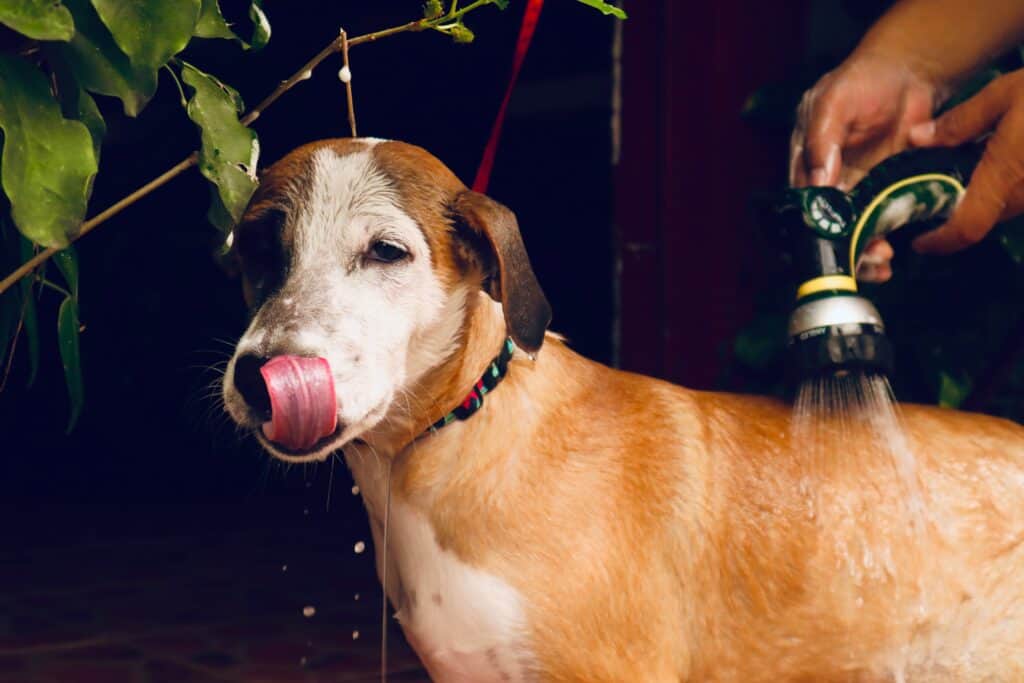
| 3 | Rinse your dog thoroughly until all of the foam is off their fur. |
| 4 | Wash your dog again with your regular dog shampoo to finish. |
Once you can confirm the skunk smell is gone, your furry friend is free to come back inside!
FAQs About Dogs and Skunks
Why do skunks spray?
Skunks spray as a way to defend themselves whenever they feel threatened. Dogs, being the curious creatures they are, tend to get too close to skunks. Before spraying, skunks may try to scare them off by hissing but dogs tend to miss those cues.
What are some signs that a dog was sprayed?
Dogs may react to being sprayed by rolling around on the ground, sneezing, vomiting, pawing at their face, and acting as if they have been blinded.
How long does skunk odor last?
It depends on how quickly you act. If you don’t break down the oils fast, the odor can linger on your dog for days or even weeks.
How is a skunk bath different from a routine bath?
Skunk odor can’t simply be rinsed off with soap and water — and it actually spreads when it contacts water. That’s why, in a skunk bath, you should not wet your dog before applying the treatment.
How far can a skunk spray?
About 10–15 feet — with some odorous mist reaching beyond 20 feet.
How to Avoid Having Your Dog Skunked in the Future
At Pet Palace, we understand the pressure that comes with making sure your dog is properly cleaned and taken care of after a skunk attack. That is why we want to help you eliminate the problem at the source to ensure your dog is happy, healthy, and safe!
Some of the tips and tricks that we recommend for doing so include the following:
- Leave a light on outside at night – Since skunks are nocturnal animals, keeping a light on at night can help deter them from entering your yard, ensuring that your pet is safe when you let them out. You can also invest in solar-powered lights for your yard to further protect against skunks.
- Consider automatic sprinklers – Just like installing lights throughout your yard, putting automatic sprinklers in your yard and turning them on at night is another way to keep unwanted visitors at bay.
- Always bring food and treats inside – Dog treats and food should not be left outside, as they can often attract unwanted animals, such as skunks, looking for a snack. So make sure to always bring your treats inside if you happen to take them outside with you!
- Practice good recall with your dog – Whether your dog is in your backyard or off-leash somewhere, you should ensure that they know their recall commands. This way, when you see a skunk nearby or can’t find your dog, you can call them to you quickly and hopefully avoid a skunk interaction.
Contact Our Team at Pet Palace Today!
If you have any additional questions about removing skunk odor from your pet or want to know more about our services, let our team of pet-loving experts answer them for you.
Contact us with any questions you have. We look forward to hearing from you!

Categories: Dogs, Pet Safety, Tips for Your Pets