

YEARS IN BUSINESS

INDIVIDUALIZED ATTENTION

LARGE OUTDOOR PLAY AREAS

OVERSIZED ACCOMMODATIONS

Pet Food Statistics and Trends

Every pet owner wants their furry friend to have the best, and that includes their food. Check out our roundup post on pet food stats and facts for key insights that will teach you about the industry, pet health, and more!
Market Growth and Industry Outlook for Pet Food
- The global compound annual growth rate (CAGR) of the pet market in 2025 was projected at 3.9% (ADM)
- Through 2029, the global pet food market is expected to see a steady, average growth rate in North America and western Europe, but Latin America is projected to have a stronger rate of growth due to new brands entering the market in this region along with people’s interest in pet health and wellness products (ADM)
- The total pet food market had a valuation of $134.5 billion in 2025, and it has been projected to surpass $144.5 billion in 2026 and $303.8 billion by 2036 (Future Market Insights)
- $158 billion was spent on pets in 2024, with $68.3 billion of this figure focused on food and treats (American Pet Products Association)
- In 2026, these numbers are expected to rise to $165 billion in total sales, with $69.7 billion dedicated to food and treats (American Pet Products Association)

Consumer Attitudes and Spending Behavior for Pet Food
- 73% of pet owners around the world say that they try to give their pets treats and fun items regularly even though prices are rising (ADM)
- The top two concerns that consumers have expressed about their pets is that their furry friends are aging healthily and that they are receiving proper nutrition and supplements (ADM)
- 78% of pet owners around the world want products that could help increase their pets’ lifespans (ADM)
- 46% of American pet owners between 18 and 34 say that they prefer to purchase pet food that is all-natural (ADM)
- 77% of American pet owners are willing to pay higher prices for healthier pet food (ADM)
- 46% of American pet owners would consider changing the pet food they buy to save money (ADM)
Pet Health, Nutrition, and Wellness Stats and Trends
- 90% of pet owners in Mexico say they have bought microbiome-supporting products at least one time (ADM)
- 85% of Brazilian pet owners say that they are primarily concerned with immunity when it comes to their pets’ health (ADM)
- 53% of American pet owners are focused on healthy digestion for pet food over functional benefits (ADM)
- The Association for Pet Obesity Prevention (APOP) has warned pet owners that approximately 61% of cats and 59% of dogs qualify as being overweight or obese (Global Pet Industry)
- Key benefits of quality pet food according to owners include balanced food intake (70%), easy digestion (56%), and healthy skin and coat (49%) (Global Pet Industry)
Pet Food Product Trends
- By the end if 2025, the freeze-/air-dried pet food segment of the greater pet food market was projected to bring in $2.4 billion (Petfood Industry)
- Refrigerated and frozen dog food has been projected to see a compound annual growth rate of 21.2% through 2029 (Petfood Industry)
- 50% of 500 American pet owners surveyed say they have bought fresh pet food, and 44% say they would do so again depending on cost (Petfood Industry)
- Pet parents tend to prefer cat food that features a high protein content, balanced nutrition, and minimal processing (Petfood Industry)
- Most dog owners – 77% – would choose egg as an alternative protein source for their pets, while 61% would choose algae and 63% would choose vegetables (Global Pet Industry)
Pet Feeding Habits and Preferences
- 65% of dog owners prefer dry kibble for their pets (Global Pet Industry)
- More than half of pet owners – 56% – feed their dog twice a day, and 20% feed them once a day (Global Pet Industry)
- 3 out of 10 pet owners determine how much to feed their dog based on the instructions on food packages, 27% go by the physical condition of their pet, and 22% rely on vet recommendations (Global Pet Industry)
- 63% of pet parents say that they give their dogs treats evert day, and only 2% say they never give treats (Global Pet Industry)
- More than 5 out of every 10 pet parents prefer beef when it comes to protein in their pet’s food, followed by 44% opting for salmon, 38% choosing lamb, 30% preferring duck, and 20% focusing on wild game, veal, trout, and other fish (Global Pet Industry)
Purchasing Behavior and Decision Drivers for Pet Food
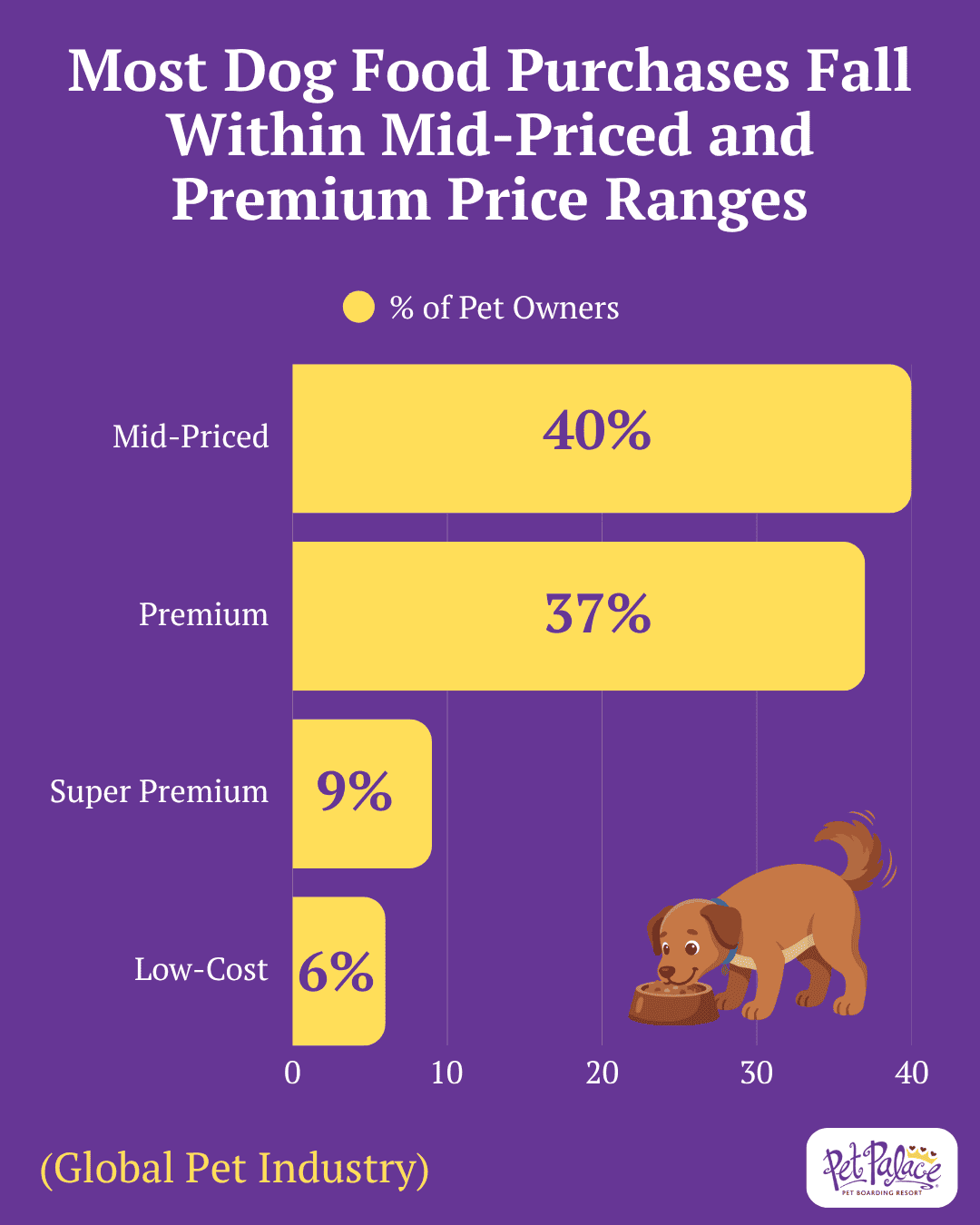
- When it comes to purchase habits, 40% of people buy mid-priced dog food, 37% buy premium food, 9% buy super premium food, and 6% buy low-cost food (Global Pet Industry)
- Half of pet owners say they check ingredient lists when choosing dog foods, focusing on nutritional value, health benefits, and ecological impact (Global Pet Industry)
- 27% of pet parents say a vet’s recommendation is vital when determining what products to buy (Global Pet Industry)
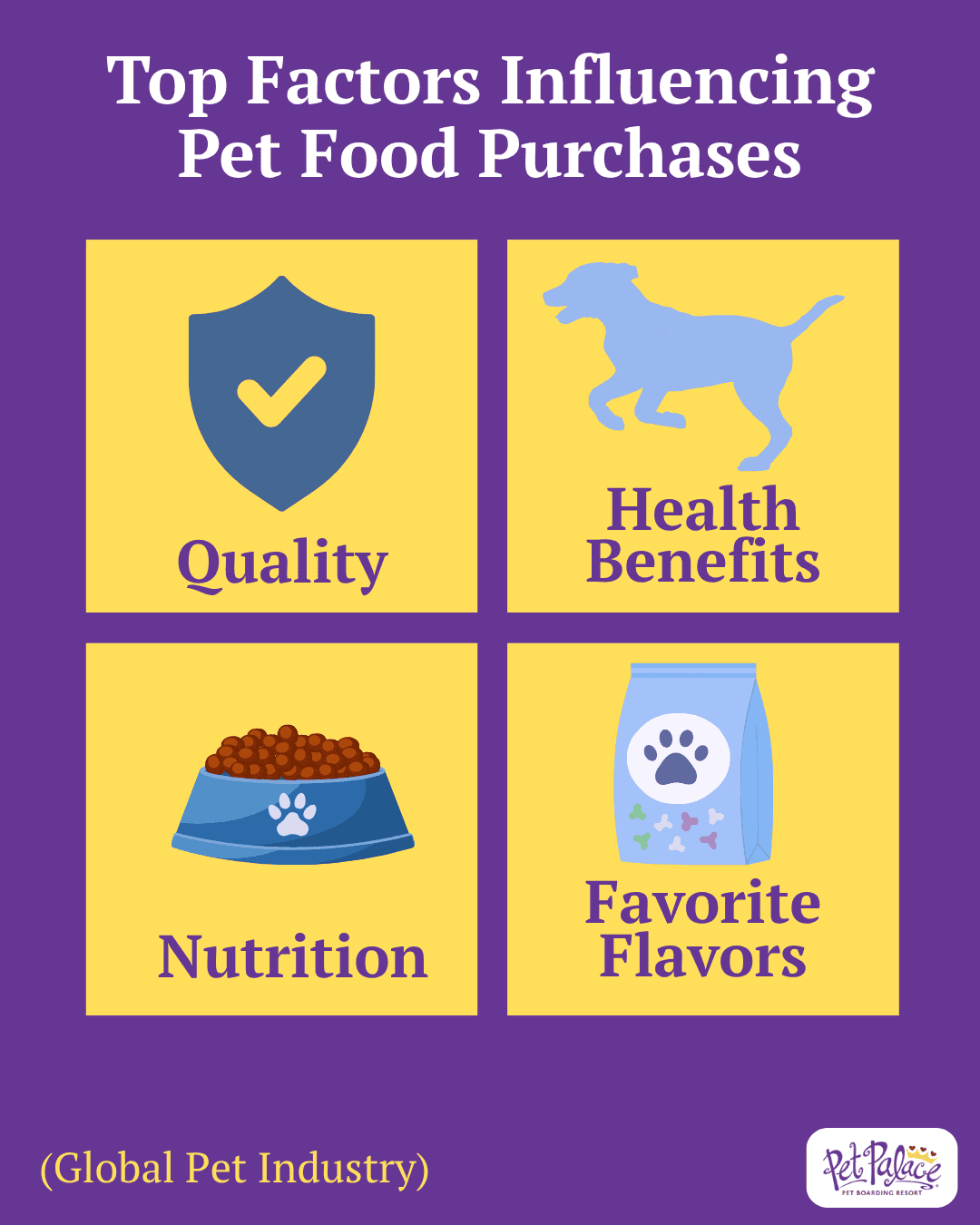
- 60% of pet owners buy dog food after assessing its quality, 50% consider the nutritional intake, 29% focus on the health benefits, and 23% take into account the flavors their pet likes most (Global Pet Industry)
Retail Channels and Ecommerce Trends
- 23% of all pet spending in Canada is made through websites (Global Pet Industry)
- Most Americans – 55% – buy their dog food at supermarkets (Global Pet Industry)
- 34% of pet owners use ecommerce sites to purchase pet food, treats, and products (Global Pet Industry)
- Online retailers, like Chewy and others, are projected to have a 50.6% market share for pet food sales in 2026, largely driven by auto-shipment systems, greater assortments of items, and easy access to premium and specialized food (Future Market Insights)
- Conventional pet food products command a 78.9% share of the pet food market in 2026 (Future Market Insights)
Subscription and Convenience Trends
- When looking at everyday categories like household goods, groceries, and pet food, 27% of American consumers currently use a subscription service for scheduled deliveries (Petfood Industry)
- 30% to 36% of Gen Z, Millennials, and Gen X use subscription services for pet food and other goods, but only 17% of Baby Boomers do so (Petfood Industry)
- 39% of pet product shoppers use the internet for at least one kind of pet product subscription, with pet food being the most common choice at 20% (Petfood Industry)
Generational and Behavioral Difference in Pet Food Purchases
- Different generations prefer different feeding habits for their pets, with Millennials and Gen Z prioritizing variety, freshness, and texture, and Boomers and Gen X preferring traditional dry food for reliability and simplicity (Petfood Industry)
- Dog owners like to customize their pet food, with 2/3 adapting store-bought food at home or creating their own (Petfood Industry)
Pet Food Production and Supply Trends
- Pennsylvania has the most pet food facilities with 59, Michigan has 33, Wisconsin has 28, Nebraska has 27, and Washington has 26 (Global Pet Industry)
- The state that produces the most pet food is Texas, creating 443,049 tons of processed ingredients, followed by California which creates 401,804 tons (Global Pet Industry)
Need Help with Pet Care? Pet Palace Is the Best Choice!
If you’re looking for convenient and professional dog and cat boarding, doggy day care, or pet grooming services, our team is ready to help.
Contact us today to schedule an appointment at one of our locations!

Categories: Pet Statistics