

Therapy Dog Services in Charlotte: The Best Organizations in the City
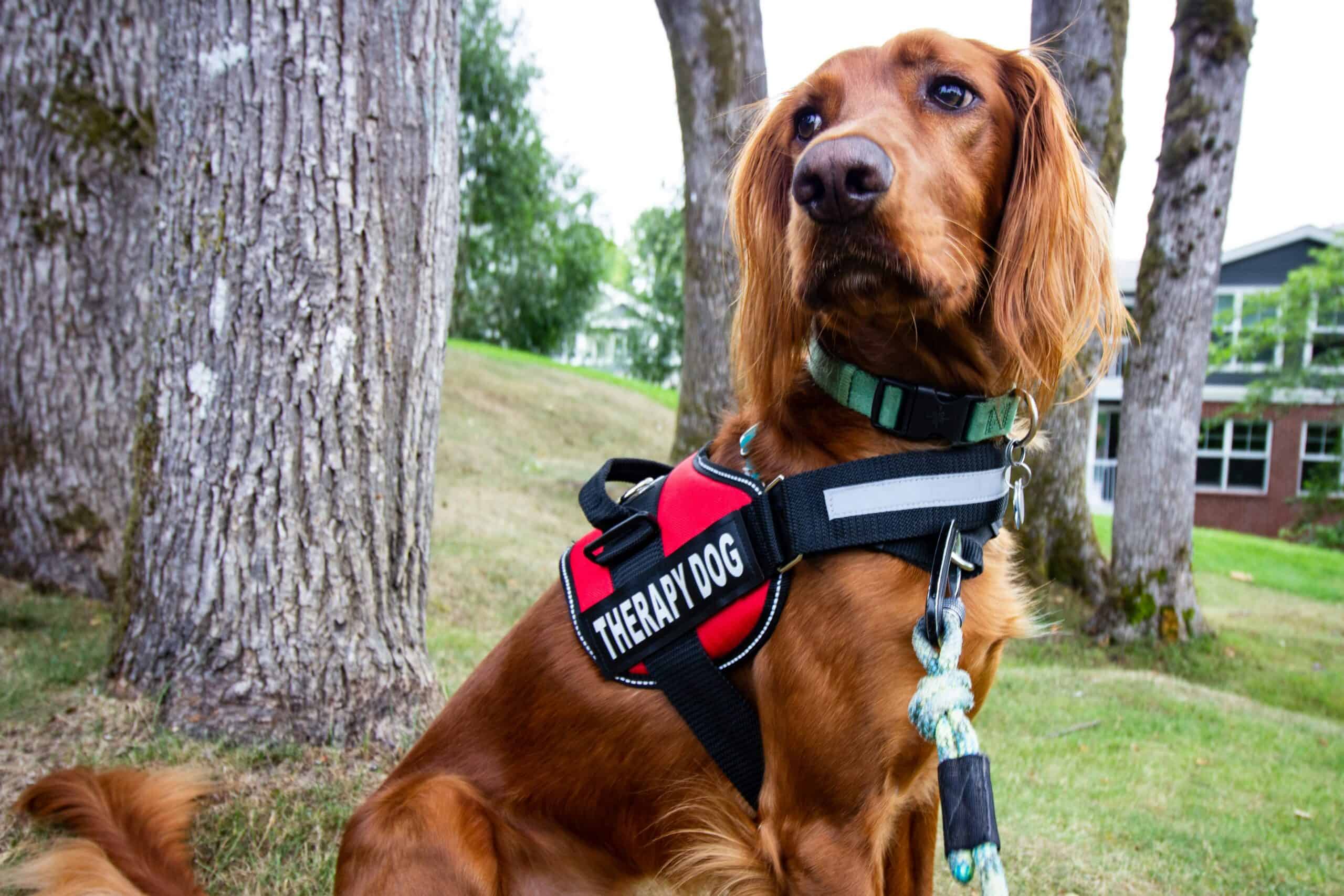
Before you sign your dog up for therapy dog certification, you will wat to determine where you want to volunteer with your pet. Therapy dogs are not service dogs, and do not have a legal right to enter any facility. You must get certified according to the places you want to visit. Below, we outline everything about getting your dog certified in Charlotte.
⚠️ With no uniform state or national certification rules, it’s important to be prepared when going about your individual certifications.
Therapy Dogs, Service Dogs, and Emotional Support Dogs
The American Veterinary Medical Association (AVMA) says that therapy animals “have no federal right to access.” Their vest does not get them in the door, and neither does a certification. The certification makes them eligible for entry, but it’s ultimately up to management’s discretion.
Other differences between therapy, service, and emotional support pets include the following.
| Service Dog | Therapy Dog | Emotional Support Dog | |
|---|---|---|---|
| Who do they help? | Their own handler, who has a disability | Other people in hospitals, schools, and similar places | Their own owner |
| Training involved? | Yes, for specific tasks | No, their temperament is evaluated instead | No training requirement |
| Can they enter places with pet restrictions? | Yes, protected under the Americans with Disabilities Act | No, no federal right at all | Only in housing accommodations |
| Legally required certifications | None | No, but organizations require their own | No, but needs a letter from a licensed provider |
Since individual organizations require their own certifications for entry, let’s look at where you complete certain certifications.
The American Kennel Club’s Role
A common misconception is that the American Kennel Club certifies therapy dogs. What they actually offer is a title and recognition based on volunteer work that the dog and handler team has already completed. A dog must be certified by one of the AKC’s recognized organizations to be eligible for receiving the AKC Therapy Dog title.
The AKC starts its recognition with ten verified visits earning you an entry-level title. You can receive the highest level of recognition, Supreme, with 600 visits.
Roughly 205 organizations are on their recognized list. Five of these are national organizations, and the rest are local or regional organizations. Therapy Dogs International is not on the AKC list, but many Charlotte facilities do accept their certification.
Charlotte’s AKC-Recognized Organizations
While you do not need to certify at an AKC-recognized organization, there are two Charlotte-specific organizations featured on the AKC list.
Invisible Paw Prints, Inc.
Invisible Paw Prints is a Charlotte-based nonprofit that tests and registers therapy dog teams.
✅ Listed on AKC’s list as serving Greater Charlotte
✅ Named by Novant Health Charlotte as an accepted credential
For more information on membership, you can contact Invisible Paw Prints, Inc. at invisiblepawprints2016@gmail.com.
The Dog Knowledge Service and Therapy Dogs
The Dog Knowledge Service and Therapy Dogs is the second organization that appears on AKC’s list of recognized therapy dog organizations.
They can be contacted directly through their website for help with any additional questions.
Certify for the Door You Want to Walk Through
As you now know, each place you want to volunteer at has its own requirements before you can enter. Here are some examples.
| If you want to volunteer at: | Get certified at: |
|---|---|
| Atrium Health’s Happy2Heal program at Levine Children’s |
|
| Charlotte Douglas International Airport CLT Canine Crew |
There are additional age specific requirements as well.
|
| Novant Health’s Charlotte Hospital Program |
|
What It Takes to Get Certified
What most therapy dog handlers don’t realize is that the certification process costs you more time than it does money.
The Alliance of Therapy Dogs has their own requirement set:
- Minimum dog age – At least 1 year, with varying additional requirements based on the organization
- Health – Current on locally required vaccines, negative fecal test every 12 months
- Bite history – Disqualifying, with a narrow exception for a puppy bite at 9 months or younger that was never reported
- Evaluation – A handling assessment covering the dog’s manners and your handling skills
- Supervised visits – 3 to 4 observations, at least 2 of them in medical facilities
- Staying active – At least 1 in-person visit every 3 months
- Cost – $75 to register, but optional training classes are priced separately
Wherever you decide to certify, be sure to check their specific organizational requirements beyond the certifications they accept.
Places to Volunteer in Charlotte
Atrium Health, Happy2Heal at Levine Children’s
Handlers must be over 18, complete hospital volunteer training and a program orientation, and re-evaluate yearly. Dogs must be at least a year old, current on vaccinations, on monthly flea and tick treatment, free of skin conditions or open wounds, and bathed within 24 hours of a visit.
Charlotte Douglas International Airport, the CLT Canine Crew
Teams can roam the terminal on any day from 8 a.m. to 8 p.m., with dogs wearing “Pet Me” vests and handlers wearing crew shirts.
Charlotte Mecklenburg Library, Paws to Read
Children aged roughly between five and eleven can read aloud to a certified therapy dog in short increments. Some branches take walk-ins while others require registration. Check with your local branch for the most up-to-date guidelines.
Frequently Asked Questions
Can my therapy dog come into stores and restaurants with me?
No. Therapy dogs are not service dogs under the Americans with Disabilities Act. They are used to help others outside of their handler. Therapy dogs have no legal right to enter places that do not allow pets. Every therapy visit happens because the facility lets the team in.
How old does my dog have to be to become a therapy dog?
It depends on both the certification organization and the organization you want to volunteer at. Make sure you check with both.
Does the American Kennel Club certify therapy dogs?
No. The AKC awards therapy dogs titles based upon the number of documented visits each team completes. To be eligible for recognition, your dog must first be certified by an organization on the AKC’s recognized list.
Is there a one-size-fits-all certification?
No. You must get certified for the door that you want to enter. First, decide where you would like to volunteer. Then, take a look at that organization’s requirements and the certifications they accept. This will point you in the direction of the certification to pursue.
Contact Pet Palace in Charlotte, North Carolina
Practice makes a great therapy dog. At Pet Palace, we don’t certify therapy dogs, but if you’re pursuing certification and want to expose your dog to unfamiliar people and other dogs, doggy day care can help them practice.
We also offer grooming services if your pup needs a haircut before making their visitations around Charlotte!

Categories: All Posts, Dog Training, Dogs, Tips for Your Pets